
Understanding Profit Sharing Agreements
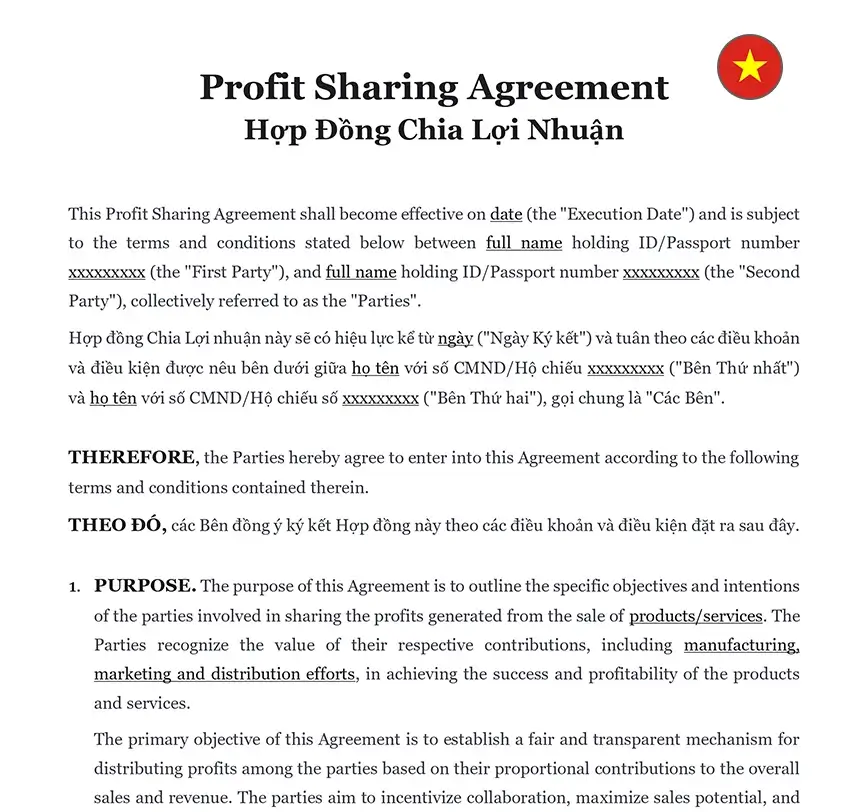
A Profit Sharing Agreement is a formal contract that delineates how profits will be distributed among business partners, investors, or shareholders. This agreement is essential for ensuring that all parties have a clear understanding of their share of the profits, how those profits will be calculated, and the schedule for distribution. By specifying these details, the agreement helps to prevent disputes and misunderstandings, providing a framework for fair and equitable profit-sharing. This clarity is crucial for maintaining positive business relationships and ensuring the smooth operation of the business. Draft clear profit-sharing terms with our Profit Sharing Agreement template.
Key Components of Profit Sharing Agreements
A well-drafted Profit Sharing Agreement includes several key components to ensure that all aspects of profit distribution are covered. These components are:
| ➤ Parties Involved: The agreement should clearly identify all parties involved in the profit-sharing arrangement, including their roles and responsibilities. This ensures that everyone understands their position and share in the business. |
| ➤ Profit Distribution: This section specifies the percentage or method used to allocate profits among the parties. It is essential to detail how profits are calculated and divided to avoid any ambiguity. |
| ➤ Payment Schedule: The agreement should outline the timing and frequency of profit distributions, whether monthly, quarterly, or annually. This helps manage expectations and ensures timely payments. |
| ➤ Accounting Procedures: Clearly define the methods for calculating and verifying profits. This includes details on accounting practices, financial reporting, and audit procedures to ensure transparency and accuracy. |
| ➤ Dispute Resolution: Include procedures for resolving conflicts related to profit sharing. This may involve mediation, arbitration, or legal action, providing a clear path for addressing and resolving disputes. |
| ➤ Modification Terms: Outline the process for amending the agreement if changes are needed in the future, ensuring that the document remains relevant as the business evolves. |
 Word Document (.docx)
Legal Requirements for Profit Sharing in Vietnam
In Vietnam, Profit Sharing Agreements must comply with several legal requirements established by local regulations. The primary regulations include the Law on Enterprises and the Civil Code. These laws provide guidelines on corporate governance, financial management, and profit distribution. For comprehensive and up-to-date information, consult official Vietnamese websites such as the Ministry of Planning and Investment and Vietnam Legal Documentation. Ensuring compliance with these regulations is crucial for the legality and enforceability of the agreement.
Benefits of Having a Profit Sharing Agreement
A well-structured Profit Sharing Agreement offers numerous benefits:
1. Clarity
By clearly defining how profits are to be shared, the agreement reduces misunderstandings and ensures that all parties are on the same page. This clarity helps prevent disputes and fosters a cooperative business environment.
2. Protection
The agreement safeguards the interests of all parties by outlining their rights and obligations. This protection ensures that each party receives their fair share of the profits and helps mitigate the risk of conflicts.
3. Flexibility
A customizable agreement allows businesses to tailor the terms to fit their specific needs and business models. This flexibility ensures that the profit-sharing arrangement can adapt to changes in the business or financial conditions.
Common Pitfalls in Profit Sharing Agreements
When drafting Profit Sharing Agreements, be aware of common pitfalls that can lead to disputes:
| ➤ Vague Terms: Ensure that the terms regarding profit distribution are detailed and specific. Vague language can lead to misunderstandings and disagreements between parties. |
| ➤ Inadequate Dispute Resolution: Include comprehensive mechanisms for resolving disputes. A lack of clear procedures can exacerbate conflicts and lead to lengthy legal battles. |
| ➤ Failure to Update: Regularly review and update the agreement to reflect changes in the business structure or financial conditions. An outdated agreement may not address new challenges or opportunities. |