
Understanding Product Distribution Partnerships
Product distribution partnerships involve agreements between manufacturers and distributors to market and sell products. These partnerships can help manufacturers expand their reach while providing distributors with new products to offer their customers. At Themis Partner, our expertly crafted templates ensure your distribution partnerships are clear, fair, and legally sound. Understanding the nuances of such agreements is crucial to establishing a successful partnership. Distribution partnerships allow manufacturers to leverage the established networks and local market knowledge of distributors, thereby ensuring efficient market penetration and increased sales volume. Distributors, on the other hand, gain access to a diversified product range, which can enhance their market offering and customer base. Clear communication, mutual goals, and well-defined terms form the foundation of a successful product distribution partnership. Use a Partnership Agreement to formalize terms for distribution partnerships.
Researching Potential Partners
Before entering into product distribution partnerships, conduct thorough research to identify potential partners who align with your business goals and values. Here are the key factors to consider:
Market Reputation: Assess the potential partner’s reputation in the industry.
Distribution Network: Examine the breadth and efficiency of their distribution network.
Financial Stability: Ensure the partner is financially stable to support long-term collaboration.
Industry Experience: Evaluate their experience in the industry relevant to your products.
Current Market Coverage: Check their existing market coverage and reach.
Customer Base: Analyze their customer base to see if it aligns with your target market.
Logistical Capabilities: Assess their warehousing, transportation, and overall logistical capabilities.
References and Reviews: Seek references and reviews from other companies they have partnered with.
Official Resources: Utilize reliable resources like the Vietnam Trade Promotion Agency and the Vietnam Chamber of Commerce and Industry for additional information.
 Word Document (.docx)
Drafting a Comprehensive Agreement
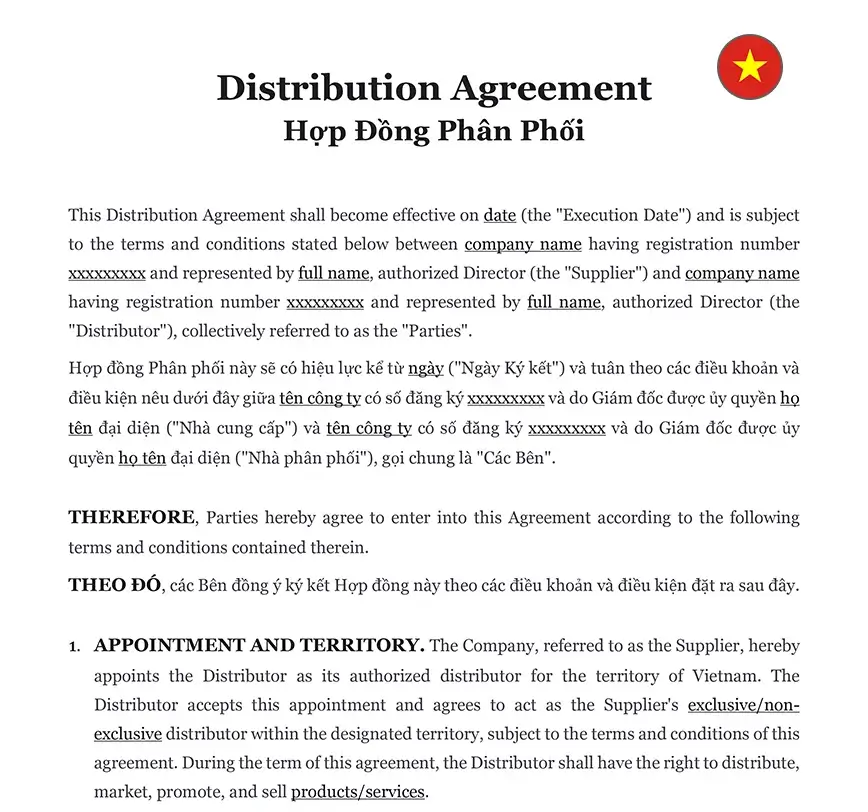
A well-drafted agreement is crucial for successful product distribution partnerships. Key elements of the agreement include:
| ➤ Parties Involved: Clearly identify the manufacturer and distributor. This ensures there is no ambiguity regarding who the agreement applies to and clarifies each party's role. |
| ➤ Product Details: Specify the products included in the distribution agreement, including any variations or new releases that might be covered. |
| ➤ Territory and Exclusivity: Define the geographical area and exclusivity terms for distribution. Clearly state whether the distributor has exclusive rights to sell your products in a specific area or if there are other distributors involved. |
| ➤ Payment Terms: Outline payment methods, schedules, and any associated fees. This should include details on how payments will be processed, deadlines for payments, and any penalties for late payments. |
| ➤ Duration and Termination: State the agreement duration and conditions for termination or renewal. Specify the initial term of the agreement and under what circumstances it can be extended or terminated. |
| ➤ Responsibilities: Detail the responsibilities of both parties, including marketing and sales. This ensures that both parties understand their obligations and can help prevent disputes. |
| ➤ Dispute Resolution: Include mechanisms for resolving potential disputes, such as mediation or arbitration, to provide a clear path for conflict resolution. |
Navigating Legal Requirements
Compliance with local laws and regulations is essential for product distribution partnerships in Vietnam. Follow these steps to ensure your agreements are legally sound:
1. Familiarize Yourself with Legal Requirements: Review the guidelines provided by the Ministry of Industry and Trade (MOIT) and the Vietnam Competition and Consumer Authority (VCCA) to understand the regulatory framework for distribution partnerships.
2. Understand Trade Laws: Research the relevant trade laws that govern the distribution of products in Vietnam, including import/export regulations and any industry-specific requirements.
3. Adhere to Industry Regulations: Ensure your distribution agreements comply with any specific regulations related to the industry in which your products fall.
4. Register Your Agreement: Consider registering your distribution agreement with the appropriate local authorities to provide additional protection and legitimacy to your partnership.
5. Stay Informed About Regulatory Changes: Keep up-to-date with any changes in regulations that may affect your distribution agreements and adapt your practices accordingly.
Read Securing Your Supply Chain with Supplier Contracts for managing supply relationships.
Establishing Clear Communication Channels
Effective communication is vital for the success of product distribution partnerships. Establish regular communication channels to facilitate collaboration, address concerns, and monitor performance. This can include scheduled meetings, reports, and a designated contact person from each party. Use technology to your advantage by implementing communication tools like video conferencing, instant messaging, and shared project management platforms. Consistent and transparent communication helps build trust, ensures that both parties are on the same page, and allows for prompt resolution of any issues that may arise. Regular updates and feedback sessions can also help in aligning goals and strategies, ensuring that the partnership remains productive and mutually beneficial.
Setting Performance Metrics
To effectively evaluate the success of your product distribution partnerships, consider the following performance metrics:
Sales Targets: Set realistic and achievable sales targets that reflect the potential of the market and the distributor’s capabilities.
Market Penetration Rates: Measure how effectively your products are reaching and being adopted by the target market.
Customer Feedback: Collect and analyze feedback from customers to gain insights into the effectiveness of the distribution strategy and identify areas for improvement.
Performance Reviews: Conduct periodic reviews to assess progress, address issues, and make necessary adjustments to ensure the partnership meets its objectives.
Regularly reviewing these metrics provides a clear framework for evaluating performance, maintaining accountability, and fostering continuous improvement.
For additional performance management, a Service Agreement might be useful to define service levels and expectations.
Providing Training and Support
Ensure your distributors are well-equipped to sell your products by providing comprehensive training and support. Here’s how you can do it:
| ➤ Product Information: Supply detailed information about product features, usage, and benefits to ensure distributors fully understand what they are selling. |
| ➤ Marketing Materials: Provide brochures, product demos, and promotional content to aid in effective marketing and sales. |
| ➤ Sales Strategies: Share proven sales techniques and strategies that can help distributors effectively reach and engage customers. |
| ➤ Training Programs: Develop tailored training programs that address the specific needs and challenges of each distributor. |
| ➤ Ongoing Support: Offer regular check-ins and updates to address any issues and keep distributors informed about new developments or changes. |
| ➤ Marketing Campaign Assistance: Support distributors with assistance in planning and executing marketing campaigns to boost product visibility and sales. |